Alo Yeditepe

‘The goal in organ donation is to increase the rate of transplants from deceased donors’
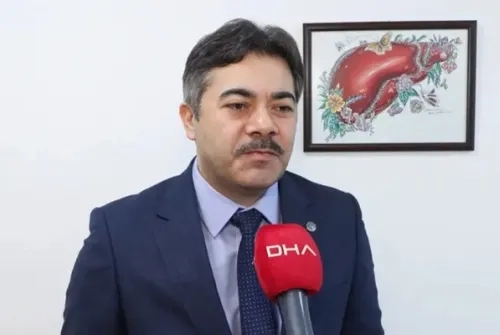
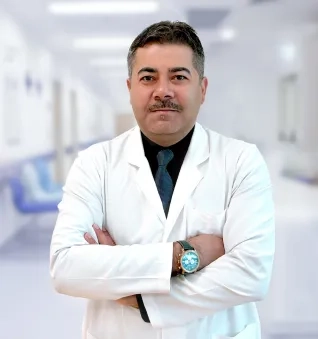
Yeditepe University Hospitals General Surgery Specialist Assoc. Prof. Ümit Özçelik drew attention to the importance of organ donation as part of Organ Donation Week, held on 3–9 November. Stating that approximately 1,800 brain death cases are reported in Türkiye every year, Assoc. Prof. Özçelik said that the organs of only one fifth of these cases can be used. Emphasizing that one of the biggest obstacles to organ donation is that people do not share with their families the decision to donate their organs that they made during their lifetime, Özçelik called on citizens to share their organ donation decisions with their loved ones. Assoc. Prof. Ümit Özçelik stated that deceased organ donation rates in Türkiye are insufficient and that donations need to be increased so that thousands of patients waiting for organs can hold on to life. Reminding that, with the new regulations introduced by the Ministry of Health, organ donation in Türkiye can now also be made via e-Nabız, Assoc. Prof. Özçelik said that organ donation saves lives.
'Organs Can Be Used in Only 20 Percent of Brain Death Cases'
Drawing attention to the very low rates of deceased organ donation in Türkiye, Assoc. Prof. Ümit Özçelik said: "In fact, our most important problem is the low rate of deceased organ donation, which unfortunately we have been unable to increase for years. While 80 percent of organ transplants in developed countries are performed from deceased donors, unfortunately this ratio is exactly the opposite in our country. Most importantly, we can use the organs in only 20 percent of the approximately 1,800 brain death cases reported in our country every year. This stands out as one of the most important problems in our country."
'Patients in a Coma Are Confused With Patients Who Have Suffered Brain Death'
Stating that there is a lack of knowledge in society about organ donation, Assoc. Prof. Özçelik said that coma and brain death are confused with each other. Özçelik said: "This is confused quite often among the public. We cannot use the organs of patients in a coma. In Türkiye, we can only use the organs of people who have suffered brain death under intensive care conditions. Citizens who wanted to donate their organs during their lifetime could previously apply to hospitals and fill in an organ donation form. However, with the new regulation, it is now also possible to donate organs via e-Nabız. Without applying anywhere, we can complete this process directly via e-Nabız by selecting the organs we wish to donate or by donating all of our organs."
'33,000 Patients Are Waiting for an Organ Transplant'
Providing information on the number of patients waiting for an organ transplant in Türkiye, Assoc. Prof. Özçelik said: "According to 2025 data, approximately 33,000 patients in our country are on the organ transplant waiting list. Of these, approximately 25,000 are patients waiting for a kidney, 3,000 for a liver and 1,500 for a heart transplant. However, because the vast majority of these patients are not referred to Organ Transplant Centers, the real figures are estimated to be far above these numbers. According to the Joint Report of the Ministry of Health of the Republic of Türkiye and the Turkish Society of Nephrology published in 2025, the total number of patients receiving treatment for chronic kidney failure in our country, including approximately 25,000 kidney transplant recipients, is approaching 100,000. Unfortunately, approximately 10,000–15,000 more people are added to this patient group every year."
'Share Your Organ Donation Decision With Your Family'
Stating that one of the most important obstacles to organ donation is that a person's view on this subject during their lifetime is not known, Assoc. Prof. Özçelik called on citizens to share their donation decisions with their families. Assoc. Prof. Özçelik said: "I think the biggest obstacle to organ donation is that what a person thought about this subject during their lifetime is not known. For this reason, our recommendation to people who will donate their organs is this: Please share this decision with your family while you are alive. Tell them that you want your organs to be donated after you die and that this is your wish. The second problem can be certain mistaken religious beliefs. However, with the decision published by the Presidency of Religious Affairs (Diyanet) in 1980, it has been established that organ transplantation is permissible."
'If Deceased Donations Are Increased, Waiting Lists Can Be Reduced'
Stating that an average of 5,500 organ transplants are performed annually in Türkiye, Assoc. Prof. Özçelik said that approximately 3,500–4,000 of these are kidney transplants and 1,500 are liver transplants. Noting that kidney and liver transplants can also be performed from living donors, Özçelik stated that patients waiting for heart, lung, pancreas and small intestine transplants have no chance of benefiting from living donors.
Özçelik said: "Because the liver and kidney can also be obtained from living donors, these patients have some chance of reaching a transplant. However, patients waiting for a heart, lung, pancreas or small intestine have no chance of a transplant from living donors. Patients on dialysis can somehow sustain their lives until they receive a transplant. For this reason, they may have more time to wait for a deceased-donor organ. Unfortunately, patients waiting for other organs do not have such a chance."
'If Organs Could Have Been Used in 1,400 Cases, Thousands of Transplants Could Have Been Performed'
Drawing attention to the rate at which the organs of patients who suffered brain death were used according to 2025 data, Özçelik said: "In 2025, the organs of 400 of the approximately 1,800 people who suffered brain death in our country could be used. The organs of approximately 1,400 people could not be used. If the organs of these 1,400 people could have been used, approximately 2,800 more kidney and 1,400 more liver transplants could have been performed. Considering that the number of patients on the liver transplant waiting list is approximately 3,000, if organ donations had reached a sufficient level, it might have been possible to clear the list of patients waiting for a liver transplant completely within about two years."
'Let Our Organs Not Turn to Dust, But Become Hope for Someone'
Emphasizing that organ transplantation is the most important way for patients to gain a new and healthy life, Assoc. Prof. Özçelik concluded his remarks as follows: "First of all, I want to say this: Organ transplantation saves lives. The only way for these people to regain a healthy life is organ transplantation. Yes, dialysis is a temporary solution. It can somehow keep patients alive until they receive a transplant. However, since there is no method like dialysis for people waiting for organs such as the liver, heart and lungs, the only way for them to survive is an organ transplant. The message I want to give our citizens is this: please donate your organs. Let our organs not turn to dust; let them become hope, life and breath for people desperately waiting for an organ transplant. One day, the person waiting for that organ could be you.”
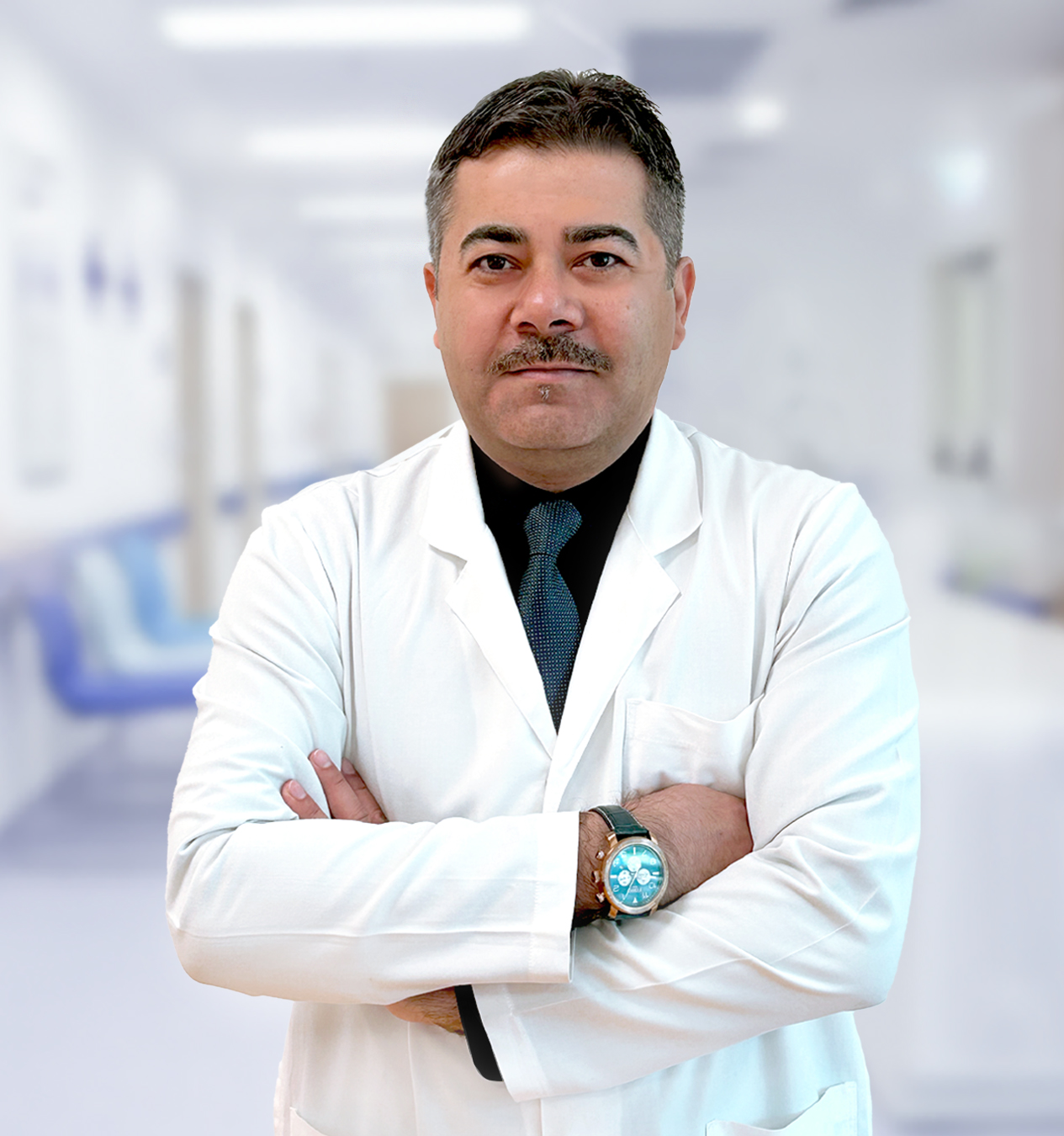
About
Faculty and Year of Graduation:
Ankara University School of Medicine, 2002
Alo Yeditepe
Our Services