Alo Yeditepe

Journey of Hope from Georgia to Turkey: 63-Year-Old Father Donates Kidney to Son
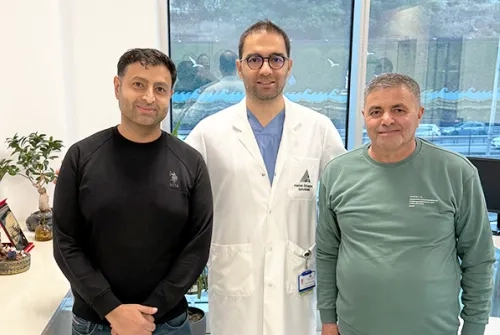
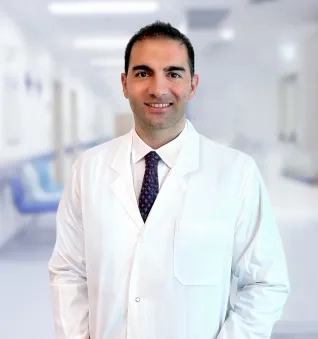
Namık Mamedov, 39, who lives in Georgia, had been battling kidney failure for 14 years. Not wanting to be depentent on to a dialysis machine at such a young age, Mamedov sought a solution in Turkey. His greatest support on this journey came from his 63-year-old father, Djambulat Mamedov. The father decided to donate his kidney without hesitation, saying, “I decided to give my kidney so my son's condition wouldn't worsen.” Thanks to the successful operation performed by General Surgery Specialist Assoc. Prof. Dr. Veysel UMMAN and his team using a fully closed method, both father and son quickly regained their health.
Djambulat Mamedov, 63, donated his kidney to his son, Mamedov, who had been battling chronic kidney failure for 14 years. Following the successful operation performed by Associate Professor Veysel Umman, Head of the Organ Transplant Center at Yeditepe University Koşuyolu Hospital, and his team using a closed (laparoscopic) method, the father and son quickly regained their health. Describing the change he experienced after the surgery, Namık Mamedov said, “I came from Tbilisi and had no difficulties after the surgery. Everything was very easy and comfortable. Anyone considering this process should not hesitate. It was a very successful, very safe operation. I am infinitely grateful to Assoc. Prof. Dr Veysel UMMAN and his team.”
“I Didn’t Want to Go on Dialysis, My Life Changed in Turkey”
Namık Mamedov, a married father of two, recounted the years he spent battling illness and undergoing organ transplantation: “I was twenty-four years old when, after a train journey, I noticed that my legs were swollen up to my knees. I had never had any health problems before. After evaluations in Georgia, I was diagnosed with kidney failure, but no one mentioned the option of a transplant to me. I underwent drug treatment for years, receiving serum treatment in the hospital for 12–24 hours once a month or once every two weeks. Salt and sugar were forbidden. I even had to limit my water intake. My quality of life had deteriorated significantly. Dialysis was my last resort, and I wanted to find a solution before reaching that stage. I came to Turkey and experienced an incredible process here. My surgery went very smoothly, and I had no difficulties. Now I have completely returned to my normal life."
“A Kidney Transplant Was Necessary for a Quality Life”
Assoc. Prof. Dr. Veysel UMMAN , Head of the Organ Transplant Center at Yeditepe University Koşuyolu Hospital, provided the following information about Namık Mamedov's treatment process: "Our patient had been suffering from kidney failure for a long time and was being monitored with a diagnosis of ‘chronic glomerulonephritis,’ which is kidney inflammation. He was being monitored without dialysis treatment, with urine output remaining at its current level. However, his quality of life had declined, his energy levels had significantly decreased, and a kidney transplant was now necessary for him to lead a more comfortable, higher-quality life." Tests conducted after the father applied as a donor revealed compatibility due to genetic similarity. The challenge we faced in this case was the presence of two arteries supplying the donor kidney. This complicates the surgery technically because it requires preserving and reconnecting these small vessels both when removing the kidney and when implanting it into the recipient. We successfully preserved both vessels and reconnected them in the recipient. This resulted in healthier blood supply to the kidney."
“There is no need to wait for the final stage for a transplant.”
“As in this patient's case, many patients do not need to wait for the final stage for a transplant,” said Assoc. Prof. Dr. UMMAN. "Some patients think, ‘I'll endure as long as possible and have a transplant as a last resort.’ However, this is not correct. Preemptive transplants, which are performed before starting dialysis, are much more advantageous for both the patient's general health and long-term quality of life. This is because long-term dialysis increases the risk of heart disease and infection and causes fatigue and complications in the body. In this patient, the father was the donor, and the tests showed compatibility. It was a technically challenging case because there were two arteries supplying the donor kidney. However, we successfully completed the surgery using a minimally invasive technique, and both patients were discharged shortly thereafter."
“Kidney Transplant Performed Using Fully Closed Surgery”
Assoc. Prof. Dr. UMMAN stated that performing the operation using a completely closed (laparoscopic) technique provided significant benefits for both the patient and the donor, saying, "In this method, the kidney is freed through small incisions and removed in a bag without direct contact with the organ. This results in a much more comfortable process in terms of postoperative pain, infection, and recovery time. The closed method allows the donor to return to their normal life in a short time and enables the kidney to be removed and transplanted quickly."
Assoc. Prof. Dr. UMMAN continued, "One of the noteworthy points in this case was that the donor was 63 years old. Generally, 65 years of age is considered the upper limit, but this is evaluated on a case-by-case basis. Our tests showed that the father was in good physical condition and had no contraindications. Thus, the 63-year-old father donated his kidney to his son. Postoperative checks showed that the kidney was functioning very well and that both the father and son were healthy."
“Turkey: A Globally Trusted Center for Organ Transplantation”
Emphasizing Turkey's strong position in the field of organ transplantation worldwide, Assoc. Prof. Dr. UMMAN said, “Many patients from Georgia, the Balkans, and the Middle East choose our country. We can quickly evaluate patients and plan their surgeries. After the operation, we discharged the donor on the second day and the recipient on the third day. We ensured that they stayed in Turkey for a few weeks after discharge to continue their check-ups."
“As Long as My Son's Face Smiles”
Namık Mamedov, emotionally describing his father's sacrifice, said, “He is not only the one who gave me life, but also the one who brought light back into my life.” 63-year-old Djambulat Mamedov concluded his words as follows: "My son's health was more important to me than anything else. My kidney was a match for him, so I gave it without hesitation. Now we’re both doing very well, thank God everything is fine. I feel as if I’ve never had surgery.”
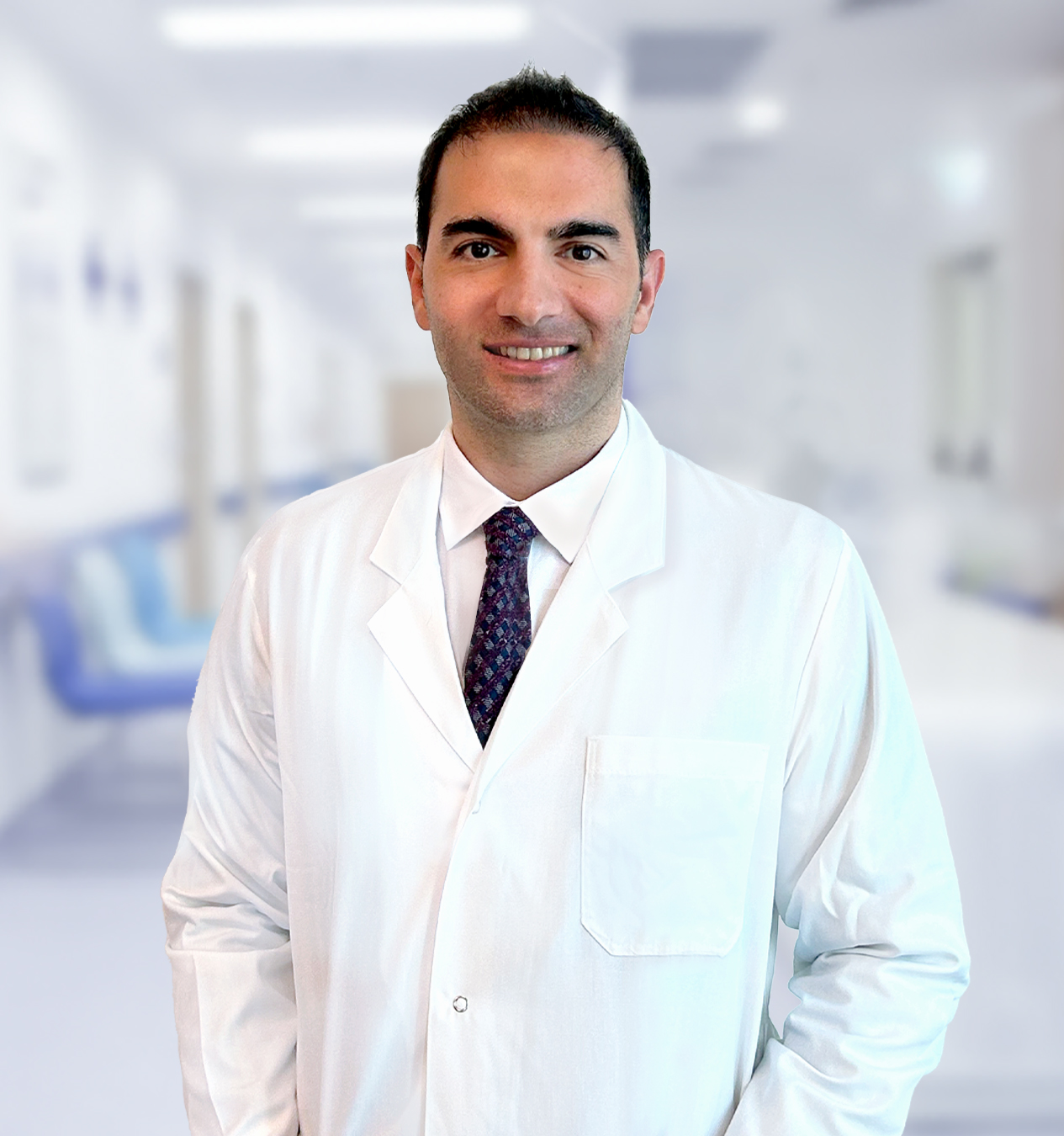
About
Faculty and Year of Graduation:
Yeditepe University, 2010
”
See Also
- How Should Home Care Be After a Kidney Transplant?
- Fall from Height Led to Kidney Failure, Saved by Sister's Donation
- What is a Liver Transplant, How is it Done? and Who is it For?
- Birthday Gift Becomes a Gift of Life: Kidney Donation from Husband of 20 Years
- Can Liver Cancer Be Prevented?
- Common Misconceptions About Kidney Transplantation
- 19 Years Old Davut MİNAZ, Who Lost 45 Kilos in 4 Months, Clung to Life with His Father's Kidney
- What are the Problems Requiring Gallbladder Surgery?
- Gallbladder Surgery is a Necessity, Not a Choice
- What is Organ Donation?
- Liver Cancer (Tumor) and Treatment
- What is a Kidney Transplant?
Alo Yeditepe
Our Services