Alo Yeditepe

Is Breathing Air Dangerous in Fires?
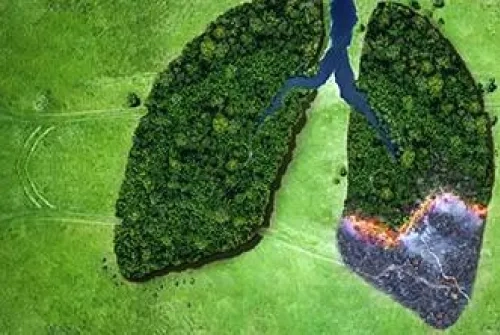
Fires Destroying Our Country's Lungs Also Affect Health!
While the lungs of our country are burning with forest fires, the air inhaled at the same time makes the lungs sick. Chest Diseases Specialist Dr. Lecturer, Seha AKDUMAN pointed out that even the health of those who are not directly exposed to smoke and are not in the area of influence of the fire is in danger. He said that the danger may be more especially for those with lung diseases such as underlying COPD and asthma.
The fires that have been raging all over our country for days have affected our forests, the lungs of our country. While the extinguishing efforts continue, the smoke released into the atmosphere is spreading throughout the region. Therefore, pointing out that the quality of the breathing air is seriously affected, Yeditepe University Kosuyolu Hospital Chest Diseases Specialist Dr. Lecturer, Seha AKDUMAN pointed out that this situation threatens the health of everyone living in the region, especially lung patients such as COPD and asthma.
Fires Pollute Breathing Air
Explaining that fire smoke emits fine particles such as PM2.5 (particles smaller than 2.5 microns) and PM10, our expert said: "These particles reach the lungs and bloodstream, triggering respiratory and heart diseases. Because in the event of such a disaster, the number of these particles exceeds the limits set by the WHO many times over. Chemical substances are also released into the air and the carbon dioxide content far exceeds the limits. As a result, it has a wide range of effects from the eyes to the skin, from the lungs to the heart. While complaints such as coughing and wheezing increase, the risk of heart failure, heart attack and stroke also develops."
Can Increase the Risk of Attack 5 Times in COPD Patients!
Stating that especially people with respiratory diseases and cardiovascular diseases are at risk, our expert gave the following information: "In people with respiratory diseases such as asthma, COPD, bronchitis, heavy smoke irritates the airways, causing inflammation and spasm. In COPD patients, the risk of having an attack in smoky weather can increase up to 5 times. These people complain of shortness of breath, lack of oxygen and coughing. Likewise, in people with hypertension and heart failure, smoke triggers inflammation in the vessels and creates an additional burden on the heart. Studies show that the risk of heart attack increases by about 42 percent on days when air pollution is high. In people with cardiovascular problems, complaints such as palpitations, dizziness and weakness may occur after exposure to smoke."
Who is at Risk in Breathing Air After Fire?
Explaining that especially people over the age of 65, children and pregnant women and people with weak immune systems are in the group that should be careful, Dr. Lecturer, Seha AKDUMAN continued her words as follows: "In older people, lung function decreases and the immune system weakens. In addition, the rate of chronic diseases is higher in these people. Therefore, they are more affected by smoke. Likewise, children's lungs are still developing, making them more vulnerable to environmental pollutants. Fine particles such as PM2.5 can irritate children's airways, increasing the risk of developing asthma. Smoke exposure during pregnancy can also lead to an increased risk of premature birth and low birth weight. Especially patients undergoing chemotherapy should take precautions as the risk of infection and pneumonia will increase significantly."
What to Pay Attention to in Breathing Air After a Fire?
Underlining that it is vital for individuals in these risk groups to take precautions on days when air quality is poor, the Chest Diseases Specialist gave the following information about the measures to be taken: "First of all, people in this group should try to keep themselves indoors as much as possible and close doors and windows tightly. They should also use masks with N95/N99 filters against small particles. Drinking plenty of water will also reduce the adhesion of smoke to the mucous membranes in the respiratory tract. In particular, they should use their regular medications and keep rescue inhalers with them. If there is no decrease in complaints despite the use of rescue medications, a physician should be consulted."
”
See Also
- How to Cleanse Your Lungs?
- What is Electronic Cigarette Disease (EVALI)? EVALI Symptoms and Treatment
- What is COPD? Symptoms and Treatment of COPD
- Long Journeys Increase the Risk of Embolism!
- What Asthma and COPD Patients Should Pay Attention to When Using Air Conditioning!
- What is Allergy? What are the Symptoms of Allergy?
- What is Desert Dust? Harms of Desert Dust
- Lung Cancer Screening Age
- What is Good for Cough? How to Cure Cough?
- Lung Cancer Symptoms and Treatment
- 10 Ways to Have a Sound Sleep in the Heat
- What Should Asthma Patients Be Cautious About?
- Does Poor Quality Sleep Increase The Risk of Asthma?
- What is Allergy? What are Allergy Symptoms?
- What Causes Insomnia, Diagnosis and Treatment
- 9 Common Misconceptions About COPD
- Causes, Symptoms, and Treatment of Asthma
- COPD Makes You Age Early
- Allergy and Asthma During Pregnancy
- Pollen is Now Seen Outside of Seasonal Changes
- Do Dental Caries Increase the Risk of Pneumonia?
- Lung Patients Should Not Stop Their Medications
- Smoking Rates Under the Age of 15 Are Increasing
- Inhaling Electronic Cigarettes for a Few Minutes Causes Damage to Vein Wall
- 4 Significant Preliminary Symptoms of Lung Cancer
- People Who Smoke More Than 25 Cigarettes a Day Have a 50-fold Increased Risk of Lung Cancer
- How Does Acid Rain Affect Human Health?
- Can Back Pain Be A Sign of Lung Cancer?
- Nine Out of Ten COPD Patients Do Not Know They Are Sick
- The Slowing Traffic in Istanbul Increases the Risk of Cancer!
- The American Cancer Society Has Announced; The Age of Screening For Lung Cancer Has Decreased
- Hidden Lung Cancer Cases Revealed in Tomographs Taken Due to Coronavirus
- Quitting Smoking Even After Diagnosing Lung Cancer Effects Lifespan
- Electronic Cigarettes Can Cause Heart Attacks!
- Pollen Allergy Has No Season
- Beware of Little-Known Risks of Smoking!
- Obesity is Both a Cause and Consequence of Sleep Apnea
- Asthma and COPD Attack Season Begins
- Lung Cancer
- Snoring and Its Treatment
- Using Antipyretics Uncontrolled Can Hide Pneumonia Symptoms
Alo Yeditepe