Alo Yeditepe

What Are the Factors That Cause Dementia?
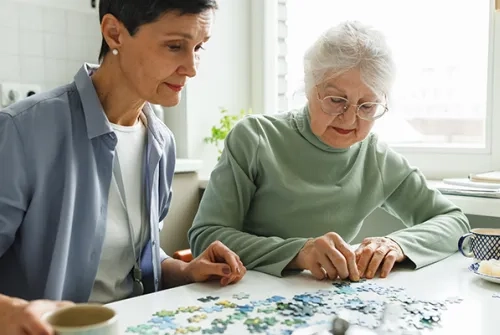
The World Health Organization (WHO) has published its updated guideline on reducing the risk of dementia. In the second edition, released on July 15, 2026, attention is drawn to many modifiable risk factors, ranging from physical activity and social life to the control of chronic diseases and air pollution. Prof. Dr. Canan Aykut Bingöl, a Neurology Specialist at Yeditepe University Hospitals, reminded that there is no definitive cure for dementia and stated that lifelong preventive habits play a critical role in reducing the risk of the disease.
Dementia, which affects millions of people worldwide, is becoming an increasingly important public health issue with the aging population. The World Health Organization's updated "Guideline for Reducing the Risk of Dementia" brings together current scientific evidence on lifestyle changes that may reduce the risk of developing the disease. Prof. Dr. Canan Aykut Bingöl, Neurology Specialist at Yeditepe University Hospitals, stated that the second edition, prepared following the first guideline published in 2019, has been significantly expanded in line with scientific data obtained in recent years.
Can Dementia Be Prevented?
Recalling that as of 2021, approximately 57 million people worldwide were living with dementia, the majority of whom are in low- and middle-income countries, Prof. Dr. Canan Aykut Bingöl stated that there is still no definitive treatment that completely halts or reverses dementia. "Therefore, preventive strategies that can be applied throughout life are considered the most effective approach to reducing the future incidence of dementia. A significant portion of risk factors are modifiable, and controlling them at an early stage is of great importance," she said.
Prof. Dr. Canan Aykut Bingöl noted that the updated guideline includes eight new risk factors, particularly HIV, stroke, and traumatic brain injury, and that the scientific evidence for the existing eight risk factors has also been reassessed.
The recommendations in the guideline are grouped under three main headings:
- Promotion of healthy lifestyle habits
- Effective management of health problems associated with dementia risk
- Reduction of environmental risk factors
What Activities Are Beneficial for Dementia Patients?
Prof. Dr. Canan Aykut Bingöl stated that the WHO guideline particularly emphasizes regular physical activity, cognitive exercises, and maintaining social life, and shared the following information: "Cognitive training programs and participation in social activities are recommended for adults with normal cognitive function or mild cognitive impairment. Regular physical activity is among the practices supported by the strongest scientific evidence in reducing dementia risk."
What Causes Dementia?
Noting that the guideline also highlights that controlling chronic diseases, not just lifestyle, plays an important role in reducing dementia risk, Prof. Dr. Canan Aykut Bingöl said that the proper management of health problems such as hypertension, diabetes, obesity, high cholesterol, hearing loss, sleep disorders, and depression is indicated to have a protective effect. She stated that smoking cessation is included as a strong recommendation, and that limiting alcohol consumption and healthy eating are among the important lifestyle changes that contribute to reducing risk.
Prof. Dr. Canan Aykut Bingöl noted that the new guideline gives broader coverage to environmental risk factors for the first time, and stated that long-term exposure to air pollution, in particular, is considered one of the significant risk factors for the development of dementia.
What Should Be Done to Prevent Dementia?
Prof. Dr. Canan Aykut Bingöl made the following recommendations that can be applied in daily life to reduce the risk of dementia:
- Engage in regular physical activity.
- Stay socially active and maintain your social relationships.
- Keep chronic conditions such as blood pressure, diabetes, and cholesterol under control.
- Do not smoke, and limit alcohol consumption.
- Follow a balanced and healthy Mediterranean-type diet.
- Do not neglect hearing and vision loss; seek treatment when necessary.
- Get regular and quality sleep, and adopt lifestyle habits that support brain health.

About
Faculty and Year of Graduation:
Hacettepe University Faculty of Medicine, 1987
”
See Also
- What Is Restless Legs Syndrome? What Are Its Symptoms? How Does It Go Away?
- What Causes Hand Tremors? Symptoms and Treatment Methods
- What is Parkinson's Disease? What are the Symptoms of Parkinson's Disease?
- Brain Health is Determined by Lifestyle, Not Age!
- Epilepsy Symptoms, Diagnosis and Treatment Methods
- What is Epilepsy?
- Consanguineous Marriage Increases the Risk of Epilepsy 40 Times
- School Stress Invites Sleepwalking
- Daughter-in-Laws Care for Alzheimer's Patients
- As Insomnia Increases, Its Harmful Effects on the Immune System Also Increase
- 8 Tips for Better Sleep
- Initial Symptoms of ALS Considered To Be Nerve Compression
- Don’t Risk Your Brain!
- Patients with Refractory Epilepsy May Lose Time Until They Receive a Proper Diagnosis
Alo Yeditepe

Our Services