Alo Yeditepe

What is Resistant Hypertension?
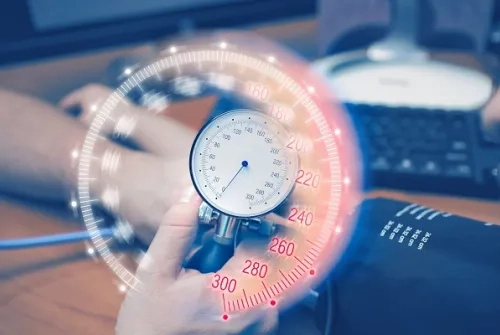
What is Hypertension?
Hypertension can be defined as the pressure in our blood vessels being higher than normal. The pressure inside the arteries needs to be within established normal values. According to international guidelines, hypertension is considered when blood pressure is above the determined limit of 140/90 mmHg.
Hypertension is among the most common diseases worldwide. According to World Health Organization data, 1.4 billion people have hypertension, and it is estimated that this number will approach 2 billion by the end of the 2020s.
How Many Types of Hypertension Are There?
There are two types of hypertension: essential hypertension and secondary hypertension. Essential hypertension, whose cause is not fully known, is more common. Secondary hypertension, on the other hand, is seen in less than one in 100 patients. Different problems, particularly originating from the kidneys, renal arteries, or adrenal glands, can trigger secondary hypertension.
What are the Risk Factors for Hypertension?
The primary risk factor for hypertension is genetics. Apart from genetics, excess weight, excessive salty diet, and regular heavy alcohol consumption are among the main risk factors responsible for hypertension.
What Does Resistant Hypertension Mean?
Resistant hypertension is the inability to control a person's blood pressure despite the use of three or more antihypertensive, meaning blood pressure, medications. In these individuals, despite usually using 3, 4, or 5 blood pressure medications, blood pressure readings are 140/90 mmHg or higher. This condition is defined as resistant hypertension.
At What Ages Does Resistant Hypertension Most Commonly Occur?
Resistant hypertension is a condition that can occur at any age. This is because it is seen that in some subgroups, resistant hypertension also occurs due to different diseases. For example, resistant hypertension can be seen in the presence of a small adenoma or small mass in the adrenal gland that causes excessive stress hormone release, in narrowing of the renal arteries, or in some conditions where cortisol release is excessive. Since each of these diseases occurs in different age groups, resistant hypertension is also a problem that can occur at any age.
What are the Causes of Resistant Hypertension?
The most common cause encountered in resistant hypertension is the patient not taking their medications regularly or skipping them. In other words, medication non-adherence. Additionally, the patient's high daily salt intake and excessive alcohol consumption can also be effective in the development of resistant hypertension. Besides these, although very rare, problems originating from the adrenal gland and renal artery can also cause this condition to occur.
How is Resistant Hypertension Diagnosed?
In diagnosing resistant hypertension, a physician's examination is primarily important. During the examination, it is important to measure the patient's blood pressure, compare it with their home measurements, and evaluate them. In addition, when needed, resistant hypertension can be diagnosed with 24-hour blood pressure measurement using a blood pressure holter monitor.
How is Resistant Hypertension Treated?
Treatment of resistant hypertension actually requires a holistic approach. It is important to carry out both medication treatment and lifestyle changes together. Salt restriction, losing excess weight if any, and regular exercise are among the primary things the patient needs to do.
Another important part of the treatment is medication therapy. Medication treatment, especially appropriate for the patient's age and physical characteristics, must be maintained.
In holistic treatment, some non-drug interventional methods have also been on the agenda in recent years. The most important of these is renal denervation. In a normal healthy individual, keeping blood pressure under control is achieved by signal transmission between the central nervous system and connected nerve networks, our kidneys, and the arterial system. These signals are produced especially by the sympathetic nerve fibers located around the renal arteries. In patients with resistant hypertension, these sympathetic nerve fibers show excessive activity, causing signal production far above normal and consequently excessive stress hormone release. Inappropriate blood pressure increases occur due to excessive stress hormone release. The aim of the renal denervation procedure is to suppress the inappropriate excessive activity of these nerve fibers around the renal arteries by applying radiofrequency energy, thus preventing blood pressure from rising. Technically, the procedure is performed in angiography laboratories using angiography principles. Usually, the renal arteries are accessed through the femoral artery in the groin, and ablation is applied to the nerve fibers around the renal arteries with the help of special devices called catheters that allow us to enter the renal arteries and a device providing radiofrequency energy. After the ablation procedure, performed separately on both renal arteries, is completed, the catheters are removed from the body, and the femoral artery entry site in the groin is closed using angiographic technique. The patient is kept under observation in the hospital that night and is usually discharged the next day.
This complementary interventional method has taken its place as an effective, safe method that we use appropriately and confidently, especially in patients with resistant hypertension whose blood pressure cannot be controlled despite taking 3 or more antihypertensive drugs, with its medium and long-term results also supported by publications.
In summary, lifestyle changes, medication therapy, and interventional treatment methods constitute the fundamental building blocks of holistic treatment for hypertension, especially resistant hypertension.
What Happens If Resistant Hypertension is Not Treated?
The effects of hypertension are divided into two: acute effects, meaning sudden serious acute effects, and chronic effects.
Acute effects: High pressure within the vessel can cause tears in the vessel. A tear that may occur in the main artery, defined as aortic dissection, can pose a life-threatening risk for the individual. Apart from dissection, brain hemorrhages or serious acute organ damage can occur in cases of extremely high blood pressure where pressure rises suddenly.
Even if hypertension does not cause acute damage, it can harm the body over the years on a chronic basis. For this reason, hypertension is defined as the "silent killer". Cardiovascular diseases, atherosclerosis are some of the chronic problems hypertension can cause. Apart from this, it also puts different organs at risk by causing damage to small vessels. Conditions such as kidney failure and heart failure pose life-threatening risks for patients in both acute and chronic periods. Therefore, hypertension must definitely be treated well.
”
See Also
- Can Heart Valve Diseases Be Treated Without Surgery?
- How Do Heat Waves Affect the Heart?
- What is TAVI? How Is It Performed? Who Is It Applied To?
- What Causes High Blood Pressure? How Is It Monitored?
- What is Heart Rhythm Disorder (Arrhythmia)? Symptoms and Causes
- How Do We Know When We Have a Heart Attack?
- What is Sudden Cardiac Death? What are the Symptoms?
- Risk Factors in Heart Diseases
- How Do Heart Disease Risk Factors Affect Women and Men?
- What is a Heart Attack? What are the Symptoms of a Heart Attack?
- Carotid Artery Disease
- What is Intravenous Ultrasound (IVUS)?
- Is Your Heart Ready For Winter?
- The Risk of High Blood Pressure Increases as You Go to High Altitudes
- By 2025, Hypertension Patients Are Expected to Reach 1.5 Billion
- Misconceptions about the Female Heart
- Coronary CT Angiography (Virtual Angiography)
- Effort Test
- Heart Attack Causes and Symptoms
Alo Yeditepe
Our Related Doctors








Our Services