Alo Yeditepe

What Are the Common Foot Problems?
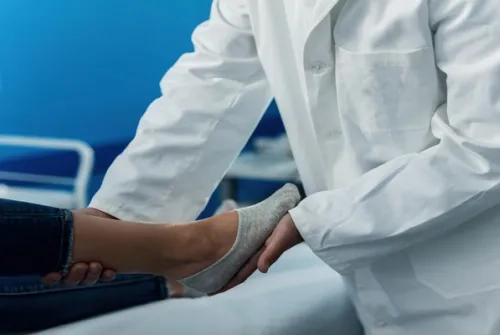
Pain, deformities, and skin issues in the feet can negatively affect daily life. Many different foot problems can be observed, ranging from heel pain to bunions, corns to hammer toes. So, what are foot diseases?Which doctor treats foot problems?What are foot-related disorders? You can find the answers to these frequently asked questions in our article.
Which Department Treats Foot Problems?
The diagnosis and treatment of foot problems are handled by the Orthopedics and Traumatology department. Evaluation and appropriate treatment planning for complaints such as pain, deformity, restricted movement, and similar issues in the foot are carried out by Orthopedics and Traumatology specialists.
Bunion (Hallux Valgus)
If a bump has formed on the side of your big toe, it is usually a painful swelling in the joint known as a "bunion" The skin in this area may become red, swollen, and tender to the touch. Bunions can be hereditary, develop spontaneously, or arise due to tight or ill-fitting shoes.
The most important step in treatment is wearing shoes that fit your foot properly, do not squeeze the toes, and do not create pressure. This often reduces pain. However, in advanced and untreated cases, bunions can lead to restricted movement and deformity over the years. There are various surgical methods to reduce pain and correct the shape of the toe. Surgery is generally performed to relieve pain.
Heel Pain
Heel pain is extremely common. It usually begins without an injury and is typically felt under the heel while standing or walking. Inflammation at the point where the connective tissue on the sole of the foot (plantar fascia) attaches to the heel bone is the most common cause of the pain. It is often associated with a bony protrusion (heel spur) seen on X-ray examinations.
Most cases resolve on their own. Medications that reduce swelling in the soft tissues of your foot and shoe insoles are quite helpful. If pain persists, steroid injections or a walking cast may be used. Surgery is recommended only in long-lasting cases.
Morton's Neuroma
Morton's neuroma occurs when a nerve becomes compressed. This compression usually causes pain between the third and fourth toes. Tight shoes can squeeze the foot bones together. The nerve reacts by forming a neuroma, which is an accumulation of extra tissue around the nerve. The neuroma can cause pain that radiates to the toes.
Treatment generally involves wearing wider shoes and taking oral medications to reduce swelling around the nerve. Placing a pad under the sole of the foot to spread the bones often helps reduce symptoms. Your doctor may also inject cortisone around the nerve. If the problem continues, surgery to remove the neuroma may be recommended.
Corns and Calluses
Corns and calluses result from pressure applied to the skin of the foot. They can occur when the bones of the foot press against the shoe or when two foot bones press against each other. Common locations for corns and calluses are the big toe and the little toe. Calluses under the ends of the metatarsal bones (the long bones in the foot) are common. Soft corns can occur between the toes.
Treatment usually involves reducing pressure on the skin by changing footwear. Pads that reduce bone pressure can be helpful, but they need to be placed carefully. Sometimes, surgery may be necessary to remove the corn or the bony prominence causing it.
Hammer Toe
Hammer toes are one of several types of toe deformities. In hammer toes, there is a permanent sideways bend at the middle joint of the toe.
The resulting deformity can be worsened by narrow shoes and often causes pain over the prominent bony areas at the top and tip of the toe. A hard corn may form over this prominent bony area. The deformity can be aggravated by tight shoes and generally causes pain at the protruding bone areas on the top and end of the toe, where a hard corn may also develop.
Treatment typically involves wearing shoes that accommodate the deformed toe better. Shoe inserts or pads can also help. If you still experience significant difficulty after trying these treatments, surgical treatment may be needed to straighten the toe or remove the prominent bone area.
Plantar Warts
Plantar warts occur on the sole of the foot and resemble corns. They are caused by an infection with a specific virus. They are similar to warts found elsewhere on the body but grow inward. Due to the weight placed on them when standing, the wart cannot grow outward. You may experience severe pain while walking, and you may have one or many plantar warts.
Treating plantar warts is extremely challenging, but successful results have been achieved by repeatedly applying salicylic acid to soften the overlying callus and expose the virus. Other treatments include injecting medication into the warts, freezing them with liquid nitrogen, and, very rarely, surgical intervention.
”
See Also
- What Are Soft Tissue Injuries?
- What Causes Shoulder Pain? How Does It Go Away?
- What Is Arthritis? What Are Its Types? How Is It Treated?
- Common Misconceptions About Orthopedic Treatments
- What Causes Low Back Pain? How Is It Treated?
- What Is Total Joint Replacement?
- What Is Carpal Tunnel Syndrome? Treatment, Symptoms, and Causes
- What are Hip Joint Diseases? Causes and Treatment
- Robotic Hip Replacement Surgery
- Things to Consider When Walking in Snowy Weather
- What is Hallux Rigidus (Stiff Big Toe/Toe Arthritis)? Symptoms and Treatment
- What is Hallux Valgus (Bunion)? How is it Treated?
- What is a Bone Tumor? Bone Tumor Symptoms
- What is Crooked Leg? Can Crooked Legs Be Treated?
- What Causes Shoulder Dislocation? Shoulder Dislocation Treatment
- Knee Pain
- Wrist Pain Causes and Treatment
- Ergonomics in Automobiles Prevents Accidents
- Don't Underestimate Bone Pain That Doesn't Make You Sleep and Doesn't Relieve With Medication
- Walking and Returning to Social Life After Knee Replacement Surgery
- What Are the Advantages of Robotic Knee Replacement Surgery?
- Robotic Knee Prosthesis Surgery
- Why Does Ankle Pain Occur? What Is the Treatment?
- What Causes Hip Pain? How Does Hip Pain Go Away?
- Higher Risk of Anterior Cruciate Ligament and Ankle Injury in Female Athletes
- Spinal Fractures
- Big Toes Can Be A Big Problem!
- Hip Osteoarthritis and Hip Prosthesis
- Not Only Athletes Suffer from Meniscus Tears!
- Mistakes While Swimming Can Cause Shoulder Pain
- What is a Stress Fracture? How to Treat Stress Fracture?
- Myths About Fractures
- The First Onset of Pain in Cartilage Damage in the Knee Should Not Be Overlooked
- Sports Injuries
- He Walked Out Of The Hospital Where He Entered On Crutches
- 8 Common Misconceptions About Sports Injuries
- Knee Arthritis
- Biopsy for Bone and Soft Tissue Tumors
- Knee Pain
- Treatment of Knee Arthrosis Varies According to the Person
- A Lack of Attention to Sports Injuries in Children May Affect Their Development
Alo Yeditepe
Our Related Doctors






Our Services