Alo Yeditepe

What Are Soft Tissue Injuries?
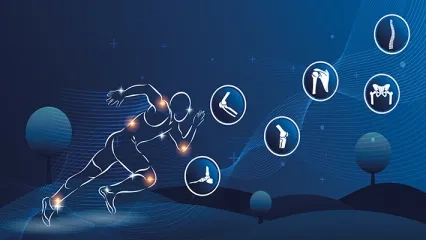
Injuries to muscles, tendons, ligaments, and other soft tissues can negatively affect daily life and mobility. The Orthopedics and Traumatology specialists at Yeditepe University Hospitals have answered frequently asked questions about soft tissue injuries.
What Are Soft Tissue Injuries?
While playing sports or exercising, the soft tissues in your body can become injured. Even simple, everyday movements can damage ligaments, tendons, or muscles. Some soft tissue injuries that may occur include:
- Sprains
- Strains
- Contusions (bruises)
- Tendinitis
- Bursitis
- Stress (overuse) injuries
These injuries can result from falls, sudden twists, or impacts. They can also recur due to overuse during sports activities. In such cases, stress accumulates in the body, leading to damage and pain.
What Is a Sprain?
A sprain is an injury caused by the sudden overstretching or tearing of the ligament tissues that support a joint. The strong ligamentous tissues in your body connect joints and bones to each other, holding the joints together. As a result of a sprain, these ligaments can become stretched or torn.
The areas of the body most commonly affected by sprains are the hands, ankles, and knees. An ankle sprain occurs when the foot suddenly turns inward, overstretching the lateral ligaments. A knee sprain can occur with a sudden twisting motion. Wrist sprains usually result from falling onto an outstretched arm.
Mild sprains mostly heal with rest, ice, compression, elevation, and exercise. Moderate sprains may require the use of a brace. In severe sprains, surgical intervention may be necessary to repair ligament tears.
What Is a Strain?
Bones are connected to each other by muscles and tendons, forming an integrated whole. Tendons attach muscles to bones. A strain is an injury that usually occurs to a muscle or tendon in the foot or leg. Strains can range in severity from a simple overstretching of the muscle or tendon to a partial or complete tear at the muscle-tendon junction. Strains are generally treated using the same methods as sprains: rest, ice, compression, and elevation. This can be followed by exercises aimed at reducing pain and regaining movement. Severe muscle or tendon tears may require surgical intervention.
What Is a Contusion (Bruise)?
Contusions are injuries caused by a direct blow to muscle, tendon, or ligament tissue. A contusion causes blood to collect around the injured area, resulting in skin discoloration. Most bruises are mild injuries and heal quickly with rest, ice application, and elevation of the area. If symptoms persist, treatment should be sought to prevent permanent damage to the soft tissue.
What Is Tendinitis?
Inflammation is the body's natural response indicating that an injury is healing. It manifests as swelling, increased warmth, redness, and pain. Inflammation within a tendon or tendon sheath is called tendinitis and is usually caused not by a single injury but by repetitive overloading.
It is commonly seen in the shoulder and arm areas of professional volleyball players, swimmers, and tennis players, and in the legs and feet of footballers, basketball players, runners, and dancers. Tendinitis is treated with rest to reduce loading, anti-inflammatory medications, steroid injections, taping, and exercises to correct muscle imbalances and increase flexibility. Persistent inflammation can lead to tendon damage that may require surgical intervention.
What Is Bursitis?
A bursa is a fluid-filled sac located between bone and a tendon or muscle, facilitating smooth movement. As a result of repetitive tension and overuse, the bursa in the shoulder, elbow, hip, knee, or ankle can become swollen. This condition is called bursitis. Many people may experience bursitis in association with tendinitis. Bursitis is usually treated with rest and anti-inflammatory drugs. Some orthopedists may inject medication into the bursa to reduce inflammation.
What Are Stress Fractures?
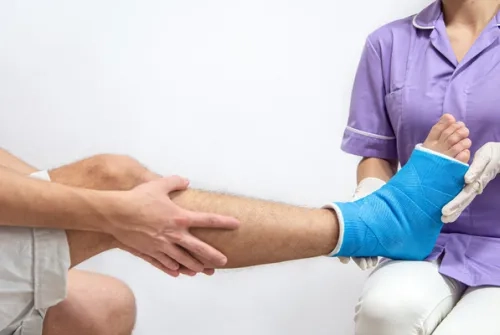
Overuse and excessive loading can cause tension in the bone, leading to small fractures. This type of injury is called a stress fracture. Initial symptoms include pain and swelling at the fracture site. Stress fractures most commonly occur in the bones of the lower leg and foot. They may not be visible on initial X-rays; in such cases, a bone scan may be required for diagnosis. Stress fractures are treated with rest, avoidance of pain-provoking activities, casting, and, rarely, surgical intervention.
How Do Soft Tissue Injuries Heal?
If you are an athlete or enjoy playing sports, you should pay attention to the signals your body gives you. Symptoms such as fatigue or pain may indicate that you are overloading your body. Always perform stretching exercises before exercising or playing sports, and avoid pushing yourself to exhaustion.
Stress injuries can also result from muscle imbalances, a lack of flexibility, or soft tissue weakness due to previous injuries. For muscle, ligament, and tendon injuries to heal completely, both proper care and time are essential. The healing process for soft tissue injuries can vary depending on the severity of the injury. During this process, it is very important to consult an orthopedic specialist for the treatment of soft tissue and bone injuries. The specialist will not only treat your problem but also create a suitable exercise or rehabilitation program to help you regain muscle and bone function.
”
See Also
- What Are the Common Foot Problems?
- What Causes Shoulder Pain? How Does It Go Away?
- What Is Arthritis? What Are Its Types? How Is It Treated?
- Common Misconceptions About Orthopedic Treatments
- What Causes Low Back Pain? How Is It Treated?
- What Is Total Joint Replacement?
- What Is Carpal Tunnel Syndrome? Treatment, Symptoms, and Causes
- What are Hip Joint Diseases? Causes and Treatment
- Robotic Hip Replacement Surgery
- Things to Consider When Walking in Snowy Weather
- What is Hallux Rigidus (Stiff Big Toe/Toe Arthritis)? Symptoms and Treatment
- What is Hallux Valgus (Bunion)? How is it Treated?
- What is a Bone Tumor? Bone Tumor Symptoms
- What is Crooked Leg? Can Crooked Legs Be Treated?
- What Causes Shoulder Dislocation? Shoulder Dislocation Treatment
- Knee Pain
- Wrist Pain Causes and Treatment
- Ergonomics in Automobiles Prevents Accidents
- Don't Underestimate Bone Pain That Doesn't Make You Sleep and Doesn't Relieve With Medication
- Walking and Returning to Social Life After Knee Replacement Surgery
- What Are the Advantages of Robotic Knee Replacement Surgery?
- Robotic Knee Prosthesis Surgery
- Why Does Ankle Pain Occur? What Is the Treatment?
- What Causes Hip Pain? How Does Hip Pain Go Away?
- Higher Risk of Anterior Cruciate Ligament and Ankle Injury in Female Athletes
- Spinal Fractures
- Big Toes Can Be A Big Problem!
- Hip Osteoarthritis and Hip Prosthesis
- Not Only Athletes Suffer from Meniscus Tears!
- Mistakes While Swimming Can Cause Shoulder Pain
- What is a Stress Fracture? How to Treat Stress Fracture?
- Myths About Fractures
- The First Onset of Pain in Cartilage Damage in the Knee Should Not Be Overlooked
- Sports Injuries
- He Walked Out Of The Hospital Where He Entered On Crutches
- 8 Common Misconceptions About Sports Injuries
- Knee Arthritis
- Biopsy for Bone and Soft Tissue Tumors
- Knee Pain
- Treatment of Knee Arthrosis Varies According to the Person
- A Lack of Attention to Sports Injuries in Children May Affect Their Development
Alo Yeditepe
Our Related Doctors






Our Services