Alo Yeditepe

Is Swallowing Cat Hair Dangerous?
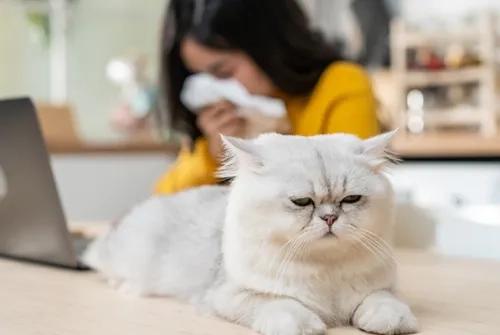
Does Swallowing or Inhaling Cat Hair Pose a Health Risk?
Swallowing cat hair is usually no different from swallowing human hair or other animal hair. It can cause nausea or abdominal pain. The hair can accumulate and form a blockage in the stomach or intestines. However, the condition commonly known as "cat dander allergy" is not directly related to the dander.
What Causes Cat Allergy?
In people who are allergic to cats, the problem is not only caused by the hair, but also by the immune system reacting to allergenic proteins found in the cat's secretions such as saliva, urine and prostate fluid. Since these allergens can also be transmitted to the cat's hair, the hair can be a carrier, but these proteins are the real source of the allergy. Therefore, even a hairless cat can cause allergies.
What are the Symptoms of Cat Allergy?
The allergic individual may develop asthma and allergic rhinitis symptoms such as itchy nose, sneezing, runny nose, itchy, watery, red eyes, cough, shortness of breath, wheezing. Occasionally, blistering of the skin may also occur.
Cat allergen is a strong allergen that can remain suspended in the air for a long time. Therefore, even if the cat is not in the environment, a reaction can develop if you enter a room where it is present. Cat allergens can also be carried on clothing; for example, if a friend carries the allergen on his or her person, this can also cause you to experience symptoms.
What is the Fel D1 allergen protein and who may be sensitive to it?
Fel d1 is the most potent and common allergen protein in cats. It is found in cat urine, saliva, prostatic fluid and hair. This antigen is responsible for the majority of feline allergic reactions.
Which Cats Have Fel D1 Allergen Protein?
Fel d1 is present in almost every cat, so there is no such thing as a “cat that produces no allergens”. The amount of Fel d1 increases especially in male cats and with increasing age. Female cats may produce fewer reactions in this respect, but this does not mean that they are completely risk-free. Similarly, younger cats may be less effective, but this cannot be generalized.
Neutering can be beneficial in terms of reducing the amount of Fel d1, especially in male cats. However, even this does not completely remove the antigen.
Sensitivity to Fel d1 is related to the individual immune system. While some individuals may only experience mild symptoms such as mild nasal itching, others may develop severe allergic reactions or even low blood pressure.
Can Allergic People Safely Live with a Cat at Home and What Should They Pay Attention to?
Since allergies occur at different severities in each individual, it may be possible to live with a cat with some precautions.
The things to be considered are as follows:
Neutering: Can reduce allergen levels, especially in male cats.
Adopting a female cat: May be preferable as it is likely to produce relatively fewer allergens.
Air purifiers: Reduces the burden of allergens suspended in the air.
Allergen-degrading sprays: Since cats do not like to be bathed, these special sprays can be sprayed on cotton wool and rubbed into the fur.
Separate room: It is important not to sleep in the same bed or room as the cat. If possible, the cat should not be in the room where you spend the night.
Hygiene of clothes and belongings: Because cat allergens can be carried on clothing and you may be exposed without realizing it.
Medical approaches include the following:
Allergy medication: Nasal spray, antihistamine tablets or syrups, asthma medication (inhalers and protectants) can control symptoms.
Allergy vaccination (immunotherapy):
This treatment can be administered as drops (sublingual) or injections (in the arm).
It lasts for a minimum of 3 years and a maximum of 5 years.
It is not recommended for people with very severe asthma or multiple allergies.
It can only be administered if you have a cat-specific allergy and there is no solution such as removal from home.
Vaccination may not completely eliminate the allergy, but it can be effective in controlling symptoms. You should also be aware that if you are allergic to cats, you are at risk of developing cross-reactions to other animals such as dogs and rabbits. For this reason, allergy testing is very important, especially before a planned adoption.
Another thing to keep in mind is that you may develop allergies while living with a cat when you have no allergic symptoms. Although it is not always possible to predict this situation in advance, living together with measures that can be taken when it develops can be sustainable in some circumstances. In this process, not only the physical but also the psychological bond should be taken into consideration. Because removing the animal from home due to allergies can have traumatic consequences for both the individual and the animal. Therefore, conscious adoption both protects your health and prevents the animal from being abandoned.
”
See Also
- Superheroes Came for Zeyd: His Dream Came True
- What is Whooping Cough? The Importance of Whooping Cough Vaccination During Pregnancy
- What is Molluscum Contagiosum? What are the Symptoms?
- Which Vaccine Should be Given in Adolescence and When?
- Precautions to Take Protecting Children from Infections
- Does Breast Milk Protect Against Diseases?
- What is DMD Disease? Symptoms and Treatment
- What is Heel Blood? Why is heel blood taken?
- What is Predisposition to Allergy (Atopy)?
- Hand Foot and Mouth Disease Symptoms and Prevention Methods
- What is Measles? Symptoms and Treatment
- How Can We Protect Children from COVID-19 Coronavirus?
- Allergies in Children Can Increase During the Summer Months
- Flu Vaccination in Children
- Hormone Disruptors
- Benefits of Breast Milk and Breastfeeding
- Congenital CMV Infection in the Neonatal Period
- Puberty
- Factors Affecting Growth in Children
- Thyroid Gland Diseases in Children
- Diabetes in Children
- Special Care for Premature Babies
- What Diseases Can Insomnia Cause in Children?
- What is the Goal in Newborn Intensive Care Treatment?
- How to Choose Baby Clothes?
- Multiple Myeloma
- Reflux Complaints Have Increased in Babies!
- Is the Incidence of Reflux Increasing Among Children?
- Set the Rules from the Beginning!
- Childhood Lymphoma Treatments Give Hope!
- What is a Premature Baby and How to Feed it?
- If Your Child is Constantly Getting Sick in the Winter, It Could be Due to Allergies
- It is Possible to Protect Children From Diseases with Simple Precautions
- Vaccine Rejection Can Lead to Irreversible Problems!
- Father Who Lost His Daughter to Leukemia Saved a Life Through Stem Cell Donation
- Preschool Health Checks Increase Socialization and Success
- Ten Hints for Providing Care for Premature Babies
- Are Pre-School Health Checks Done?
- He Beat Leukemia, Made A Graduation Ceremony in His Hospital Room, and Won the University
- Children Whose Parents Are Allergic Are More At Risk
- What Precautions Should Be Taken for Neuromuscular Diseases?
- This Disease Can Manifest Itself When Children Walk Late
- Keep It Away From Packaged Products To Strengthen Children's Immunity
- Good Results have been Achieved in Leukemia Treatment
- One-third of Obesity In Adults Begins in Childhood
- Soil Eating in Patients with Pica Syndrome
- Does Hypertension Lead to Growth Retardation in Children?
- Consanguineous Marriages Prepare the Ground for Muscle Diseases
- Pay Attention to the Children Who Get Sick Often
- ‘Hand, foot, mouth disease’ Warning from the specialist of the subject: "It is more Common in Children Going to the Pool in Summer!”
- Allergic Disease Rates Increased from 3% to 15% in the Last 20 Years
- 648 Grams Born Baby “Umut” Succeeded in Clinging to Life
- High Fever in Children Article Series I
- High Fever in Children Article Series II
- High Fever in Children Article Series V
- Caffeine Consumption in Children
- Hot Shock in Children
- Recovery from SMA Depends on the Carrier Testing
- Genetics is the Key Cause of Food Allergies in Children
- Notice the Dangers in the School Bag!
- Pay Attention to Food Allergies in Children!
- How Should the Development of a Baby Be?
- Diabetes Mellitus and its Treatment
- Guidelines for Safe Living After Hematopoietic Stem Cell Transplantation
- Complementary Foods for Babies
- High Fever in Children
- Childhood Obesity and Nutritional Recommendations
- How Should I Dress My Baby?
- Points to Be Considered in Baby Clothing
- Causes and Treatment of Obesity in Children
- Choosing Summer Clothes for Kids and Babies
- What Should a Family with Children Have in Their Summer Suitcase?
- How to Feed Newborn Babies and Toddlers in the Summer?
- What and How Much Should Children Eat at Which Time of Meal?
- What is the Right Lunch Box for Children?
- What are Hematopoietic Stem Cells and What is Their Function?
- How to Apply for Bone Marrow Transplantation?
- Frequently Asked Questions in Hematopoietic Stem Cell / Bone Marrow Transplantation
- Protecting Children from COVID-19
- Obesity Increases Early Puberty
- Breastfed Babies Have Lower Blood Pressure, and Their Hearts are Healthier
- Infection Can Cause the Onset of Asthma Disease
- Thyroid Hormone Deficiency May Cause Short Stature
- Necessary Precautions to Protect Children from the Harmful Effects of the Sun
Alo Yeditepe
Our Related Doctors


















Our Services